
Community Engagement in Solar Radiation Modification: Lessons from Two Models
.jpg)
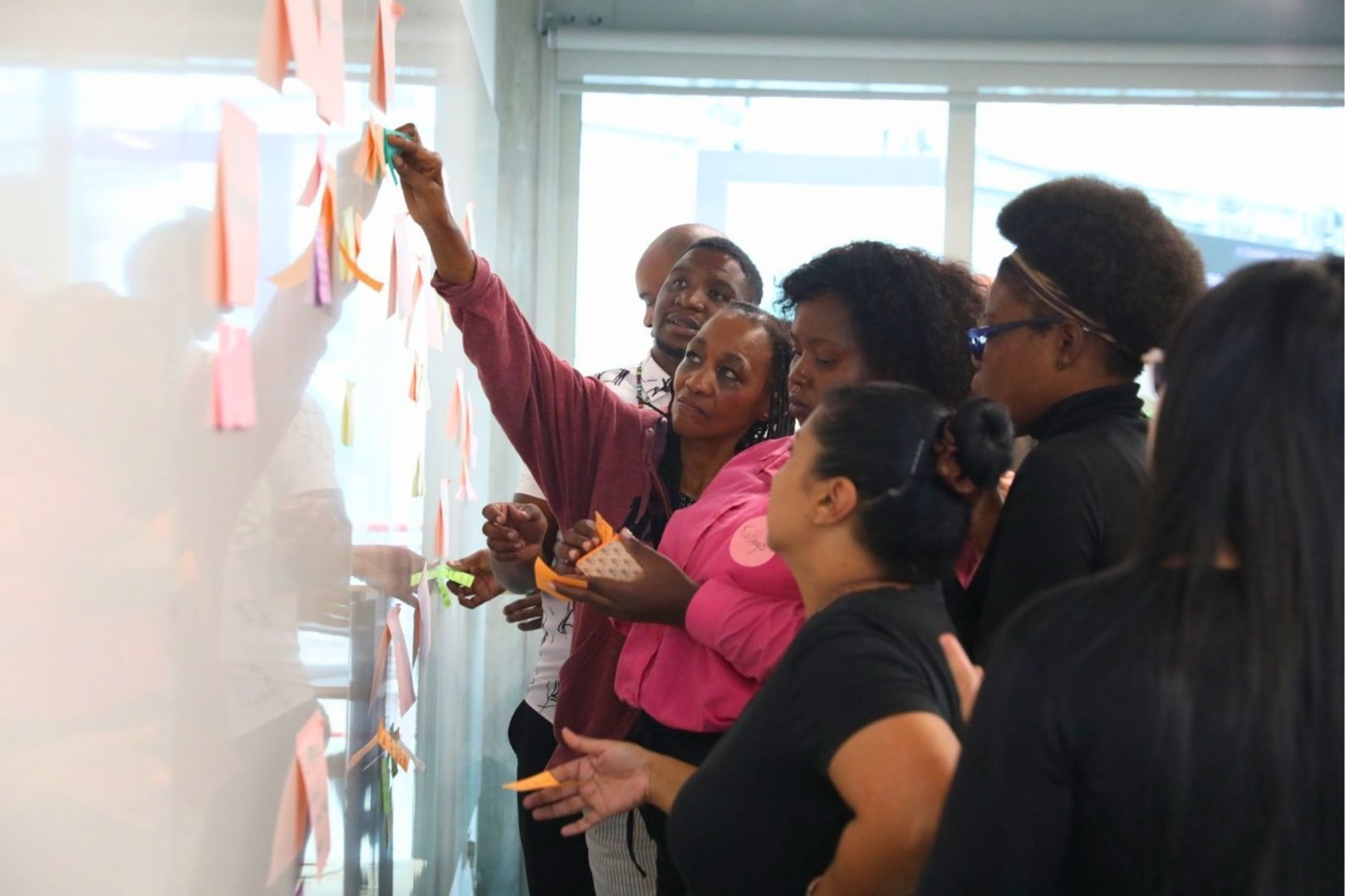
From the earliest considerations of SRM, it has been clear that communities, especially those most vulnerable to climate change, must play a meaningful role in shaping its governance. Yet many communities currently lack the capacity, opportunities, or resources to engage with SRM's complex governance and ethics questions. These are driven by principles like legitimacy, transparency, and accountability; while firmly enshrined in global climate commitments, they mean little unless they are implemented in SRM research practice.
Communities are rarely fixed, homogeneous groups with clear boundaries. They are overlapping and intersectional, shaped by geography, profession, age, culture, and identity: a young person may also belong to an Indigenous community; a farmer may also be a scientist. Who defines the relevant communities for SRM, and for what purpose, therefore changes the shape of research agendas, governance processes, public understanding, and preparations for future decision-making.
Similarly, "community engagement" is not a single activity or process. Engagement can serve multiple purposes and take many forms depending on the questions being asked and the decisions at stake: engagement around an individual research project raises different questions than engagement intended to shape policy and research priorities. Recognizing these distinctions is essential for designing engagement that is both meaningful and fit for purpose.
Just as SRM itself exists within changing political, social, and technological contexts, expectations of and approaches to engagement must also remain adaptive, recognizing that both communities and their priorities evolve.
Stretched bandwidths and priorities are hurdles to overcome for stronger community engagement
Despite growing interest, the practice of community engagement within SRM research and governance faces a distinct bandwidth challenge. As engagement efforts spread across scientific institutions, governance organizations, advocacy groups, funders, investors and the private sector — each pursuing distinct objectives and playing different roles in the emerging landscape — without heightened coordination, their actions may result in fragmented progress that may not always align with public interests or communities’ needs. The emerging siloed, ad hoc engagements, where participants contribute to individual projects or conversations without clear pathways for how those discussions connect to each other or inform the broader SRM landscape, are worth examining.
The scientific, albeit theoretical and highly technical nature of SRM makes it difficult to communicate clearly with non-specialist audiences, especially around terminologies and uncertainties, which do not always translate easily into communities’ experiences or priorities. This raises a broader question about institutional responsibility: who should lead engagement, and toward what end? Engagement intended to inform the design and conduct of a specific research project could be led by researchers, but may also require governments, civil society organizations, or trusted intermediaries to convene these conversations. Within that landscape, there is also a practical question about scientific responsibility: how much community engagement should researchers themselves be expected to undertake? And what resources should they receive to do so effectively? Public engagement has not traditionally been a central component of scientific training, and expecting researchers to become facilitators or communicators without additional tools and resources is unrealistic.
This is a research governance challenge, which sits within the broader SRM governance and ethical framework needs—to develop and leverage well-constructed scientific findings, and generate meaningful participation for and from communities in decision-making processes. Again, these are often institutionally and geographically distant from the communities they may affect, requiring time, expertise, and resources to navigate. Marginalized communities can be sidelined by existing political dynamics, while participation processes risk becoming symbolic rather than genuinely influential.
Finally, public understanding of SRM often develops through media coverage in which complex issues may be reduced to narratives of technological salvation or catastrophe, making communities vulnerable to misinformation and disinformation. Additionally, the immediate concerns of communities — economic insecurity, healthcare, or local climate impacts — understandably take precedence over abstract discussions about emerging climate interventions.
Crucially, meaningful participation must aim for lasting understanding: a single workshop or conversation may generate interest, but sustained relationships and repeated opportunities for engagement are often necessary to establish trust, retain knowledge, and build community-led coalitions empowered to make decisions that address their climate concerns.
What Can Real Community Engagement Actually Look Like?
Community-Led Research Agenda Setting
The Empowering New Voices in SRM workshop that DSG co-hosted in April 2026 was a pilot activity focused on the Southern African context that operationalized a Community-based Research Agenda (CBRA) model. Drawing from various participatory research methodologies, this Cape Town iteration sought to embed local needs and concerns as community input into the research process, to support the generation of decision-relevant information on SRM. While this is only one mechanism exemplified within the SRM research and engagement ecosystem, if the field hopes to be collaborative, responsive, and inclusive, its actors must intentionally foster meaningful community participation at the earliest research phase—design.
Over a two-day engagement, 10 African SRM-focused scientists and 16 civil society and community-based organizations from across South Africa (several with regional work across the continent) co-designed research questions that became the basis for a fast-tracked Sub-Saharan Africa-centered request for proposals led by the University of Exeter, with support from the UK Advanced Research and Invention Agency (ARIA). The non-consensus / non-outcomes-driven co-design process put a spotlight on nine interconnected thematic areas that resonated with the participants’ lived experiences, with five selected for the RFP: food security and agriculture, health, climate displacement and security, just energy and renewables transitions, and extreme weather events.
This work did not occur in a vacuum. DSG’s model of sustained engagement, working with local partners to provide repeated opportunities for representatives of over 40 civil society and academic organizations in Southern Africa over the past three years to learn about, digest, and connect SRM concepts to their workstreams and communities, has helped chart a unique pathway towards just deliberation on SRM. During this period, several other organizations were also conducting engagements and workshops, including the formation of regional, home-grown efforts: African Climate Interventions Research Hub, research funding from grants supported by The Degrees Initiative for the University of Cape Town, and the establishment of SRM civil society programs under the Green Africa Youth Organization and Emerging Climate Frontiers, to name a few.
This momentum reflects the growing consideration and concern around SRM across the African continent, particularly among groups that would not otherwise have access to spaces where they can ideate about the implications of these technologies. These engagements shaped the CBRA model and the pilot workshop beyond simply building a group of individuals and organizations familiar with SRM concepts and activities. A critical refrain of sustained engagements in the region was the question, “What’s next?”
In every region where SRM must be contended with, localized impacts knowledge is necessary to deliver meaningful, community-led decision-making capacity. The questions being asked throughout these various engagements were hyper-specific and locally grounded. To alleviate engagement fatigue from such repeated activities, it was essential to build the resources to answer, investigate, conclude findings, and disseminate them in ways that are useful and usable for civil society to play their role in SRM decision-making. This culminating workshop and the RFP together help achieve the second step of DSG’s theory of change—to leverage earlier engagements, with a mix of familiarized organizations interfacing with newer organizations to the SRM space, to ask their questions in a manner that is conducive to the development of specific, relevant research outputs, tied to research funding.
A natural extension of this work occurs once research grants are awarded and scientific findings are finalized. Based on inputs to the awards selection criteria furnished by workshop participants, Exeter and ARIA have committed to ensuring that awarded projects will prioritize research with community impacts and clarify community roles, including a requirement to develop science communications materials that can be relayed to these essential stakeholder groups. Such feedback loops enable iterative learning and thought leadership that may inform the region’s civil society about potential action or inaction, independent of DSG.
Education as a Pathway to Participation
A second recent example, the Indiana University Student Geoengineering Summit, offers a different approach to community engagement by broadening knowledge through youth education. The second annual summit, which was developed through a partnership between Indiana University faculty and local educators, brought together approximately 160 middle and high school students from across Indiana. Prior to the summit, participants completed a five-lesson curriculum introducing climate science and geoengineering concepts before developing their own imaginative climate solutions and presenting the ideas to university faculty, graduate students, and peers. Rather than simply teaching students about emerging technologies, the summit sought to empower them to become active participants in imagining their future.
While DSG was not involved in organizing the summit, DSG's Director of Strategy and Communications, Whitney Peterson, attended to learn about the students' projects. One team proposed genetically engineered bioluminescent trees that could reduce energy demand for lighting while increasing carbon sequestration. Another envisioned modifying jellyfish to photosynthesize, allowing them to absorb carbon throughout their lifetimes before sequestering it on the ocean floor after death. While many of the ideas were ambitious and speculative, the goal was not to develop immediately feasible technologies. Rather, participants were encouraged to apply scientific principles creatively and think critically about how innovation might contribute to addressing future climate challenges.
The exercise also pushed students to think beyond invention alone. Teams were asked to consider how their ideas might be implemented, what unintended consequences they could create, and how they would balance benefits against risks. Throughout the summit, students connected these discussions to their own experiences of extreme weather and environmental change, transforming climate concern into opportunities for critical thinking and a stronger sense of agency.
Hearing students confidently explain not only their proposed solutions but also the tradeoffs and implementation challenges behind them was a powerful reminder that thoughtful engagement with complex climate questions can begin much earlier than is often assumed. The summit demonstrates that meaningful engagement with emerging technologies need not be confined to scientific or policy spaces. Schools and classrooms can provide valuable settings for building scientific literacy, encouraging systems thinking, and helping young people see themselves as contributors to conversations about climate futures rather than passive recipients of information.
For SRM, the summit also suggests a scalable model for expanding participation. Rather than expecting every institution to develop its own engagement program from scratch, organizations with relevant expertise could serve as hubs, creating curricula and engagement resources that others adapt to their own contexts. Such a model broadens participation while strengthening local ownership, creating sustained pathways into governance conversations long before individuals encounter them as stakeholders or decision-makers.
Looking Ahead
Community engagement in SRM research and governance remains relatively underdeveloped, but it is increasingly clear that it will be a necessary component of the field's future. As SRM research expands, many questions cannot be addressed through scientific expertise or governance processes alone. There is no single model for community engagement in SRM, as shown by these two examples. Instead, they suggest that meaningful, tailored engagement must occur across different communities, institutions, and stages of research and governance processes.
If there is a broader lesson for the SRM community, it may be that engagement should be understood as infrastructure rather than an individual activity. Building that infrastructure will likely require sustained institutional support, interdisciplinary collaboration, and approaches tailored to the needs and priorities of different communities. Several principles emerge from these examples:
- Engage early and often to understand where interests and concerns actualize; do this without any agenda beyond outlining potential opportunities for participation that help inform research agendas and governance pathways, rather than the reverse.
- Be aware and respectful of the diversity among and within communities; they are intersectional, overlapping, and competing (internally and externally).
- Treat communities as contributors and partners rather than audiences. Respect their perspectives, and ensure those are reflected in the immediate and proceeding steps.
- Build long-term relationships, acknowledging that trust and understanding develop over time; ensure that you report everything to them, even the inane, and especially what does not directly connect to their area or identity.
- Create multiple pathways for engagement, with explicit resources tied for their use.
- Treat engagement fatigue as a critical symptom of failure. Whenever you are going back to communities, ask: what are they getting out of this that is actively supporting them in making decisions and building towards action?
As SRM research and governance continue to evolve, community engagement is unlikely to produce a single consensus or solve every governance challenge. Its value lies in creating more inclusive and responsive processes that allow a wider range of people and perspectives to participate.
Join Our Community
Stay informed about the latest developments in solar geoengineering and how you can make a difference. Subscribe to our newsletter for insights, updates, and opportunities to get involved.
Latest Posts
Community Engagement in Solar Radiation Modification: Lessons from Two Models

Readiness Is Not a Destination: Lessons from a Cross-Sector Dialogue

SRM as a Tool for Climate Security: Competitive Framing and its (Geo)Political Implications


Reading the Signals: Stardust and the Shape of an Emerging Field

.png)
From Taboo to Assumed: How Carbon Dioxide Removal Advanced Before Governance Could Keep Up and What It Means for SRM


The Danger of Performed Governance in SRM
