
DSG expands solar geoengineering learning resources with new languages, videos, and explainers

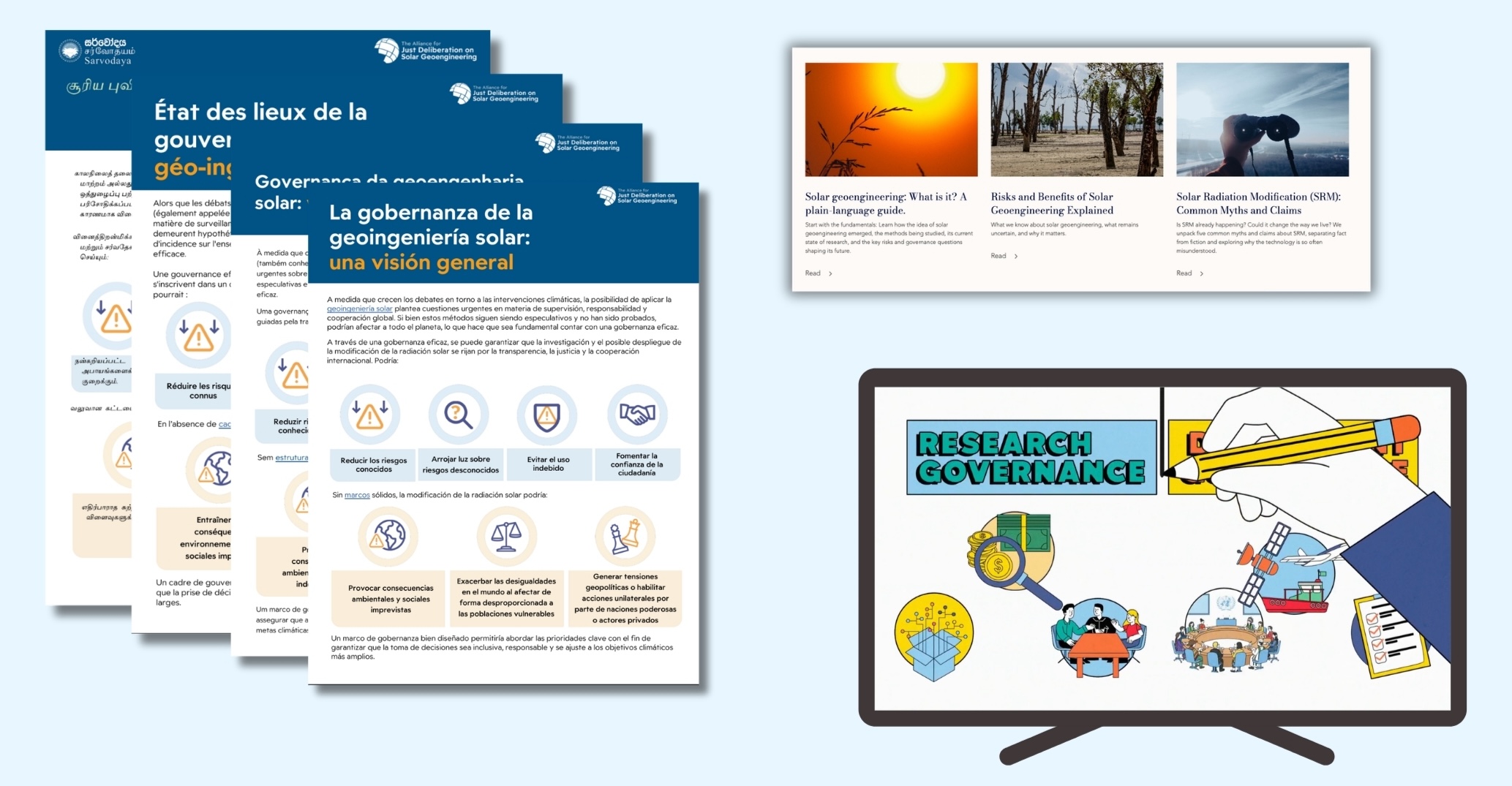
In 2025, DSG debuted its first collection of freely available learning resources to help people better understand solar geoengineering. The collection included 22 resources across four modules, covering critical aspects of solar geoengineering:
Through explainers, deep dives, fact sheets, and infographics, the resources introduce the science behind solar geoengineering while exploring broader questions surrounding its research and potential use. Since the launch, they have been used in workshops, classrooms, and by curious learners globally, reaching audiences ranging from high school students to policymakers.
As interest in solar geoengineering continues to grow, so does the need for accessible, reliable information that people can engage with, in their own languages and through different formats. Building on the original suite, DSG is now expanding our resources with new translations, explainer videos, and introductory articles designed to reach more audiences and support informed conversations around the world.
Click for the full collection.
Expanding Access Across Languages
The full suite of 22 resources has been translated into Spanish, French, and Portuguese, with select resources also translated into Tamil.
The prioritization of these languages reflects the needs and priorities emerging through DSG’s ongoing regional engagement. With engagement already taking place in Spanish in Latin America and in French in Western Africa, as well as upcoming events to be held in Portuguese in Brazil, these translations are already being utilized and tested. On-the-ground engagement in Sri Lanka also led to some resources now being available in Tamil.
Rather than selecting languages solely on the basis of global reach, DSG has prioritized translations that respond to requests from communities and partners, and that can be put to use in ongoing discussions. This approach also creates opportunities to test the materials with different audiences and refine them based on their feedback.
Good translation goes beyond finding equivalent words. Many of the terms and concepts in discussions about solar geoengineering have no direct counterpart in other languages, and a literal rendering can strip away the meaning people need to engage fully, so DSG approaches this work as conceptual translation, conveying the underlying idea in terms that make sense within each language and context.
Translation of these resources would not be possible without the expertise of Sylvie Pelissier Translations, Lourdes Martino at Traducciones del Sur, Christiane Bayer, and the staff at Sarvodaya. The DSG team worked closely with expert translators to discuss how the technical terms used in discussions about solar geoengineering could be best translated into each language. Ongoing conversations with communities also informed language choice. If you have feedback on any of the terminology used, don’t hesitate to share it with us.
To make the collection more accessible, our resources are now available as both webpages and PDFs. The web versions allow readers to use browser-based translation tools to access the content in additional languages, although automated translations may not capture every technical nuance.
Introducing New Explainer Videos
The expanded collection also includes two short explainer videos covering the need for governance and public engagement:
- Who Decides? Why Governance Matters for Solar Geoengineering
- Your Voice Matters: How Public Engagement Shapes Solar Geoengineering
These videos offer another way to engage with complex scientific and governance concepts, using visual explanations to make key ideas easier to follow. They are designed for audiences who prefer to learn through video and for educators, facilitators, and community organizations looking for materials they can incorporate into workshops, presentations, and public discussions.
Answering the Questions People Ask First
For people encountering solar geoengineering for the first time, the initial questions are often straightforward: What is it? What might it do? What are the risks? And how can people distinguish established scientific findings from common misconceptions?
Three new introductory articles address these questions directly:
- What is Solar Geoengineering? An accessible introduction to the concept, the main approaches being studied, and how solar geoengineering relates to other climate responses.
- What are its risks and benefits? An overview of the potential limitations, uncertainties, and trade-offs involved.
- What is myth vs fact? A closer look at common misconceptions, distinguishing what research suggests from public discourse might be focusing on.
Together, the articles provide a starting point for readers with little or no prior knowledge of solar geoengineering. They explain technical concepts in plain language, acting as a great first exposure to help new audiences navigate the topic in an accessible, fact-based way. They clearly define the topic, help audiences understand what we know about solar geoengineering and what we don’t, and debunk some of the most common misconceptions.
Supporting More Informed Conversations
Accessible information is an essential foundation for meaningful participation in decision-making. People need opportunities to understand the science and consider the questions that matter in their own contexts.
With these new translations, formats, and introductory materials, DSG hopes to support conversations in more languages, regions, and learning environments.
We look forward to these resources enabling conversations in new geographies and populations, and will continue to expand them further, helping ensure that more people have the information they need to participate in discussions about solar geoengineering and its governance.
Join Our Community
Stay informed about the latest developments in solar geoengineering and how you can make a difference. Subscribe to our newsletter for insights, updates, and opportunities to get involved.
Latest Posts

Solar Radiation Modification (SRM): Common Myths and Claims

Risks and Benefits of Solar Geoengineering Explained

Big ambitions, bigger questions: Our takeaways from Reykjavik

Solar geoengineering: What is it? A plain-language guide.
DSG expands solar geoengineering learning resources with new languages, videos, and explainers

Before the Rules Catch Up: What AI’s Pace and Safety Challenges Mean for SRM Governance