
CIN Stories: Strengthening Early-Career Collaboration on Climate Intervention

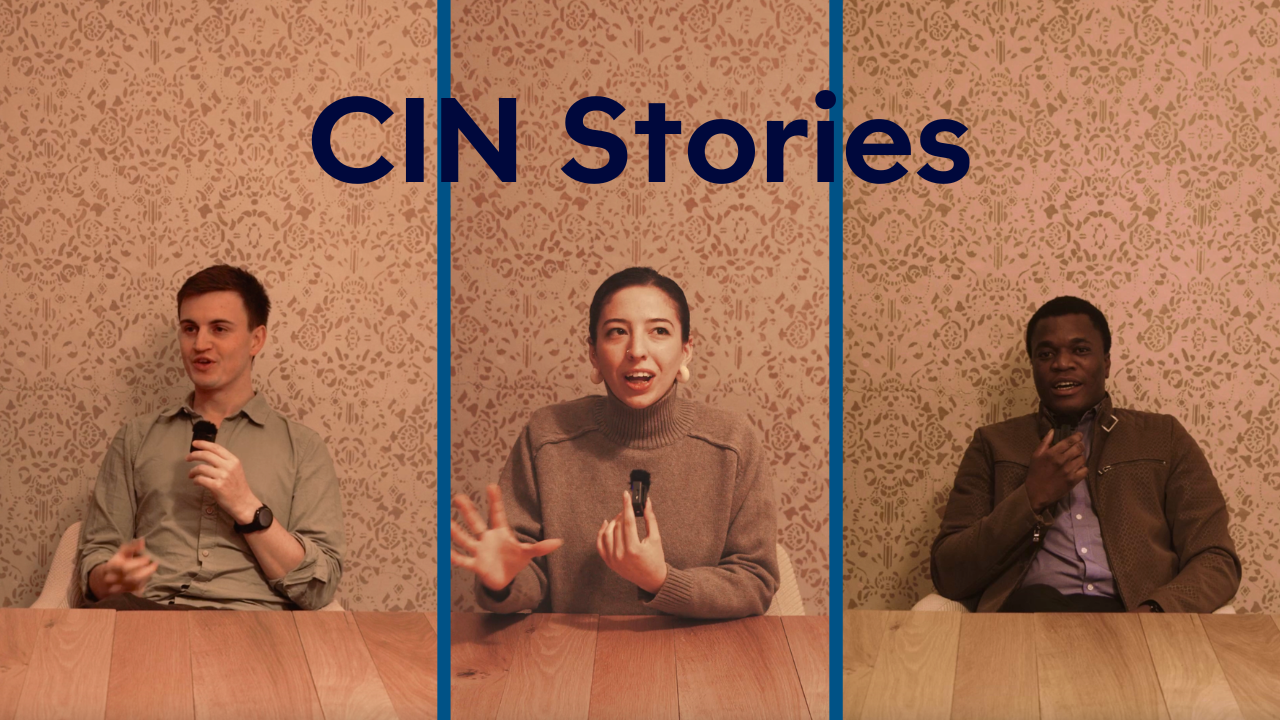
Members of the Climate Intervention Network share their work, their paths toward the field, and why cross-disciplinary collaboration matters. Discover key insights from their October 2025 in-person convening.
Globally, only a handful of young professionals are researching and working within the climate intervention space. Spread across nearly all continents, we’ve heard firsthand that the emerging nature of this work can make it feel isolated and fragmented.
On a mission to change this for the next generation of the field, the Climate Intervention Network (CIN) supports emerging leaders by providing the space and community needed to shape the future of solar geoengineering and climate governance. Founded in 2024 by DSG, CIN brings together early career professionals from around the world to foster collaboration and shared learning. By building a ‘connective tissue,’ CIN allows for global challenges to be tackled by a community rather than isolated efforts.
From Online Networking to In-Person Community Building
Following months of online exchanges with the community and a series of Book Club events, CIN gathered for its first in-person convening in October 2025. Over the course of one crisp fall week, 45 members of the community gathered in Helsinki, Finland, for a program focused on learning, dialogue, and peer engagement. Participants represented a wide range of disciplines, including physics, biology, philosophy, law, and other social sciences.
The week began with two days of presentations, interactive sessions, learning games, and small-group exchanges. Activities focused on developing skills in foresight and science communication, while also creating space to reflect on where the field is heading and how this generation of researchers sees that taking shape. Of course, there was also time allotted for community building over meals and a Finnish signature–karaoke night.
After the CIN convening, attendees had the chance to partake in ATLAS25–a conference put on by Operaatio Arktis that was organized to “bridge scientific understanding on Earth System Tipping Points (ESTP) with strategic policy-making, including approaches to climate intervention research.”
Throughout the week, we gathered the stories of participants, who reflected on why they entered this field, what motivates their work, and why connecting with peers has been so meaningful. Below are a few highlights—watch the videos to hear their full reflections.
Voices from the Network
Tolulope Emmanuel Adeliyi
Tolulope Emmanuel Adeliyi is a PhD student at the University of Illinois Chicago studying how solar geoengineering could affect temperature and precipitation patterns in the Afro-Asian monsoon region. His work also examines socioeconomic impacts, particularly population exposure and vulnerability.
Tolulope views research on SRM’s impacts as essential for fair and informed decision-making, especially for climate-vulnerable regions. So far, the results of his modelling research have shown reduced temperatures in the region due to SRM, but also reduced precipitation, which has possible implications for water availability and agricultural productivity in an agriculturally-reliant region. For Tolulope, producing robust evidence is a key step toward advancing climate justice in SRM discussions.
Julieta Nasi
Julieta Nasi is an anthropologist currently researching public perception on SRM in Latin America through a project at the Latin American University of Social Sciences (FLACSO), funded by the Degrees Initiative. She was drawn to the topic after noticing that most SRM conversations were concentrated in the Global North, with far less attention paid to Latin American contexts and impacts.
Julieta emphasizes the importance of locally grounded discussions on SRM, despite the global scale of the problem and potential solution. She sees a holistic perspective and intentional relationship-building as key to enabling conversations on the matter.
“Even though this is a technology that will have, or could have, global impacts, I think it’s very important to understand the social relationships that take place at the local level.” - Julieta Nasi
The concept of non-governance—the identification of the lack of governance surrounding SRM—is something Julieta has been examining and sees as important. She notes that because non-governance leaves societies that are potentially most vulnerable to SRM’s effects outside of the discussion, this is something that should be made visible.
Alistair Duffey
Alistair Duffey recently completed his PhD at University College London and now works as a Senior Scientist at Reflective. He knew he wanted to focus his PhD on climate science and, after looking at the climate intervention field, noticed very few people in the space. Perceiving it as a crucial topic, he decided to concentrate his efforts there.
As a climate modeler, Alistair studies the impacts of Stratospheric Aerosol Injection (SAI) on the polar regions, which are unique in that the stratosphere begins at the lowest altitude. He also investigates the physics of sudden changes in the Arctic, such as the loss of sea ice. Alistair’s modelling work revealed that Arctic injection at comparatively low altitudes (13 to 15 kilometers) could meaningfully provide global cooling in the Arctic, a surprising finding for the team. This observation meant that existing aircraft could likely be repurposed for a possible deployment scenario, reducing logistical complexities and costs.
Building community in a siloed ecosystem
A consistent theme across the convening was the value of bringing together people who rarely interact in their day-to-day work. CIN participants span the physical sciences, social sciences, and humanities, and many noted how rare it is to have sustained, structured conversations across these boundaries.
Tolulope shared that it was one of his first opportunities to engage directly with social scientists working on SRM, which reinforced for him the importance of interdisciplinary collaboration and building mechanisms for public communication, so scientific research can reach communities. Julieta and Alistair emphasized the strength that comes from having diverse voices in the network that are working constructively toward a shared goal.
“For me, it’s about building this diverse group of voices that can represent … a positive vision of what research can mean in this field." - Alistair Duffey
In a field where technical, social, and governance questions are tightly intertwined, it became evident in Helsinki that cross-disciplinary relationships are essential. CIN exists to make those connections possible early in one's career, so research paths and engagement can be shaped holistically for years to come. This gathering marked an important milestone — and a starting point for deeper collaboration ahead.
Read four more stories from CIN members. If you are an early career professional working on climate intervention, join CIN now.
Join Our Community
Stay informed about the latest developments in solar geoengineering and how you can make a difference. Subscribe to our newsletter for insights, updates, and opportunities to get involved.
Latest Posts
Before the Rules Catch Up: What AI’s Pace and Safety Challenges Mean for SRM Governance
.jpg)

New global dataset expands access to local-scale SRM modeling

Community Engagement in Solar Radiation Modification: Lessons from Two Models

Readiness Is Not a Destination: Lessons from a Cross-Sector Dialogue

SRM as a Tool for Climate Security: Competitive Framing and its (Geo)Political Implications


Reading the Signals: Stardust and the Shape of an Emerging Field
