
UNEA-7 and the Quiet Conversation on SRM

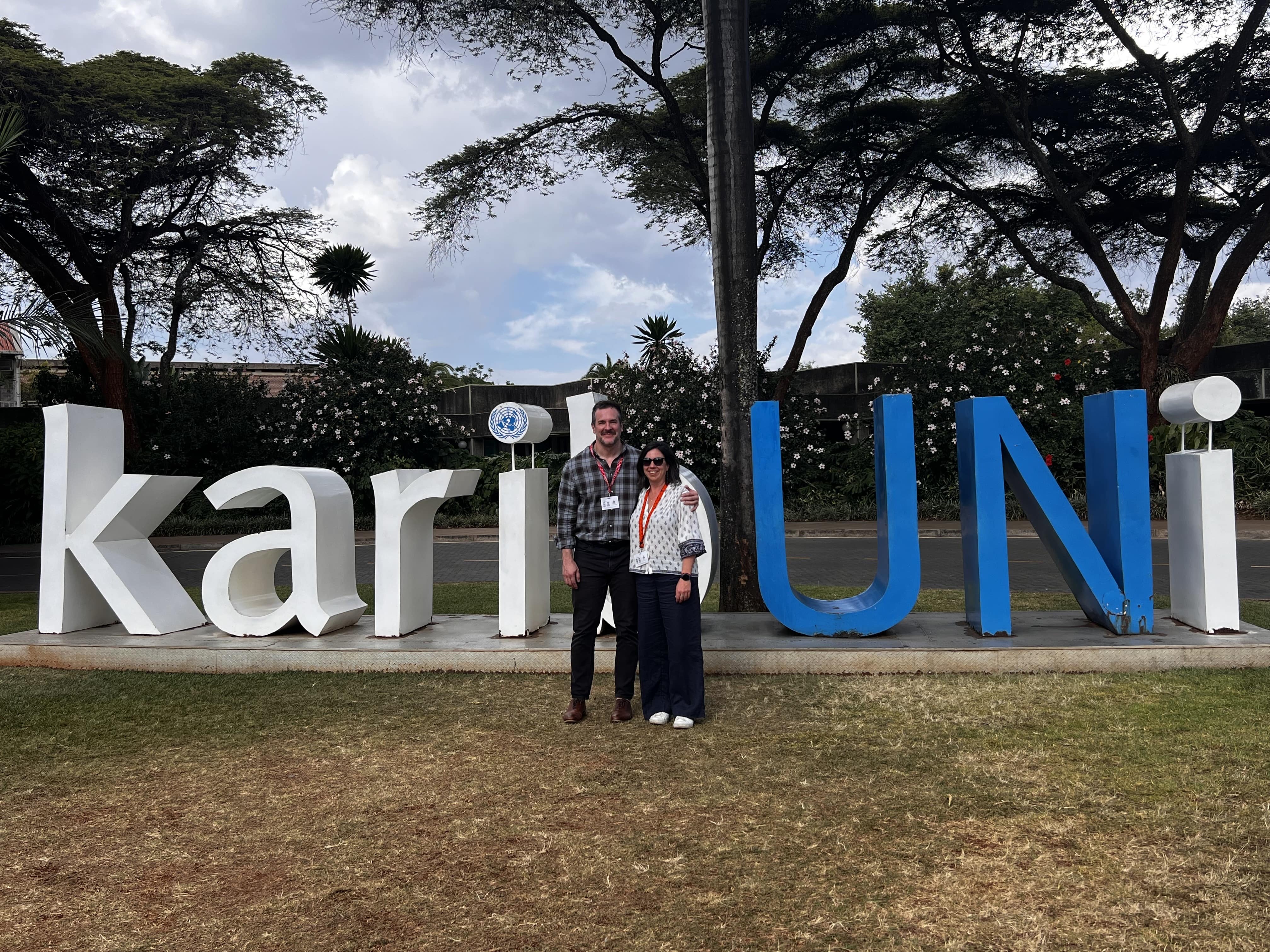
Solar radiation modification (SRM) did not appear on the formal agenda at the Seventh United Nations Environment Assembly (UNEA-7) in Nairobi. No draft resolution was tabled, and no decision was taken in plenary. But throughout UNEA-7, SRM was still present. It emerged in hallway conversations, side events, informal briefings, and exchanges among civil society organizations, youth groups, researchers, and policy actors. In recent months, opposing narratives around SRM have been circulating rapidly within and beyond multilateral spaces, generating growing attention. What felt new in Nairobi was not the increasing number of these conversations, but the interest of a broader range of stakeholders to begin engaging with this difficult and uncomfortable topic, on their own terms.
UNEA-7 Context
These conversations took place against the backdrop of strained global environmental diplomacy. The Assembly delivered resolutions covering a wide range of environmental issues, including climate resilience, minerals and metals governance, chemicals and waste, the environmental sustainability of artificial intelligence, and the protection of coral reefs and glaciers. At the same time, political disagreements, including formal disassociation by the U.S. delegation, underscored underlying tensions in multilateral environmental diplomacy.
Some of these tensions surfaced around environmental science itself. The Global Environment Outlook 7 (GEO-7), UNEP’s flagship state-of-the-environment assessment, was released during UNEA-7, but for the first time, governments were unable to agree on how to reflect its findings in formal decisions and therefore did not adopt its negotiated Summary for Policymakers. Many participants interpreted this as a political attack on science by a handful of powerful players.
If science can become contested at the outset of global environmental discussions, this has implications for how emerging and controversial issues like SRM are approached. If SRM governance enters formal multilateral negotiation, it will not arrive in a vacuum. It will inherit the same constraints shaping environmental diplomacy today: contested science, shrinking civic space, procedural disputes that mask deeper political disagreements, and deep concerns about who holds power over global risks. If multilateralism struggles on issues with clearer mandates and longer histories, it is reasonable to ask how it will cope with a technology that remains uncertain, inherently transboundary, and ethically divisive.
UNEA-7 offered a reminder of a familiar truth in global governance: politics begins long before a gavel comes down.
Why DSG Was at UNEA-7, and What We Chose Not To Do
DSG attended UNEA-7 to listen. Specifically, we sought to better understand what civil society actors and youth groups are asking for when it comes to SRM research and governance, before decisions—formal or informal—begin to close off options.
Over the course of the meeting, we spoke with a wide range of actors: civil society organizations from different regions, youth representatives, UN and UNEP officials, and scientists engaging with SRM from diverse perspectives. Because UNEA-7 was hosted in Nairobi, many of these conversations included African stakeholders, reflecting a wide range of views and priorities rather than a single, unified regional position.
It is equally important to be clear about what we chose not to do. We did not advocate for an SRM resolution, nor did we engage in discussions about deployment. Our engagement was not about pushing a particular outcome at UNEA-7. Instead, our focus was on understanding how people who are often excluded from early-stage governance are thinking about SRM: the questions they are asking, the concerns they are raising, and the kinds of support they believe are necessary to engage meaningfully with an issue that may shape future climate decisions.
What We Heard: An Interest in Acquiring Knowledge to Decide for Themselves
What we heard repeatedly from civil society and youth actors at UNEA should not come as a surprise. Contrary to claims that civil society actors or governments from the Global South hold a singular position on SRM, the people we spoke with did not want to be told what to think. They wanted to understand the science, the politics, and the stakes—and to have the space and time to think for themselves.
Across conversations, a shared concern emerged: ignorance is not protection; it is vulnerability. Several people worried that shutting down discussion would not prevent decisions, but instead leave them to more powerful actors operating in less transparent spaces. As one civil society representative put it, “Not talking about it doesn’t stop it from being decided somewhere else.”
Importantly, these conversations were not homogeneous. Views included calls for non-use or moratoria, deep skepticism paired with a desire for stronger governance, and concern about two risks at once: premature dismissal without knowledge, and rushed or unilateral action in a severe climate crisis. Broad generalizations about the views of civil society, the Global South, or African actors obscure this diversity and do not reflect the range of perspectives we encountered.
Non-Use Cannot Mean Non-Knowledge
A recurring theme was the distinction between opposing deployment and opposing learning. Many actors emphasized the importance of drawing hard lines against unilateral experimentation, commercial hype, and techno-solutionism. At the same time, they rejected the idea that justice requires disengagement or ignorance. They were not seeking talking points, but tools: briefings that unpack scientific uncertainty, spaces to interrogate governance proposals, and opportunities to build regional expertise capable of scrutinizing claims made elsewhere.
In this sense, the demand was not for endorsement or rejection of SRM, but for the capacity to assess, question, and ultimately make decisions on informed grounds.
This matters because governance debates often assume that learning itself is a slippery slope that risks normalizing SRM. Yet learning is part of how governance takes shape. What we observed was a growing insistence that access to knowledge is a prerequisite for agency, and that many actors want the space to think and decide for themselves.
The Legitimacy Problem
Critics of SRM are right to point out that research is not neutral. It builds institutions, career pathways, material capabilities, and communities of expertise that can influence how risks and options are understood over time. SRM also presents real risks of capture by geopolitical interests, fossil-aligned narratives, or claims of inevitability. Many fear that no plausible governance pathway can avoid harm, and that research accelerates dangerous trajectories.
DSG takes these concerns seriously. But what we continue to hear suggests a different kind of risk: the assumption that silence or the absence of knowledge is neutral, and that durable positions can be formed by offering communities pre-determined answers rather than the space and capacity to think for themselves. History suggests the opposite. Durable outcomes—whether restraint, prohibition, or carefully governed research—emerge from legitimate processes, not from exclusion.
UNEA-7 was a reminder of how contested inclusion already is in multilateral environmental governance. If legitimacy is fragile even on long-established issues, it will be even more so for SRM. Governance built on exclusion is unlikely to hold.
Going Slowly, As Quickly As Possible
What did “going slowly, as quickly as possible” look like at UNEA-7? It looked like listening more than speaking. It looked like acknowledging disagreement rather than flattening it. And it looked like treating SRM conversations not as proof of momentum, but as early signals that institutional readiness risks lagging behind technological readiness.
UNEA-7 illustrated both the strain and the stakes of contemporary environmental multilateralism. Disagreements over process, trust, and even the role of science were evident across the Assembly, including in debates over UNEP’s own flagship assessment. These tensions should not be read as a reason to abandon multilateralism, but as a reminder of why it must be defended, renewed, and made more just and inclusive—especially as new and contested issues come into view.
If or when SRM enters formal multilateral discussion, it will not do so on a blank slate. It will arrive in a context where scientific authority is contested, political trust is uneven, and participation is often constrained. In that setting, weakening science or dismissing research as mere “normalization” does not safeguard governance; it undermines it. Without credible, transparent scientific inquiry, there is no basis for informed collective choice, whatever the outcome.
What UNEA-7 made clear is that SRM governance is already being shaped, not through resolutions, but through who has the capacity to understand the issue, ask questions, and participate meaningfully. Keeping multilateralism alive, with science at its core, is not about pre-empting decisions, but about ensuring that when choices are made, they are legitimate, informed, and shared.
Join Our Community
Stay informed about the latest developments in solar geoengineering and how you can make a difference. Subscribe to our newsletter for insights, updates, and opportunities to get involved.
Latest Posts
Community Engagement in Solar Radiation Modification: Lessons from Two Models
.jpg)

Readiness Is Not a Destination: Lessons from a Cross-Sector Dialogue

SRM as a Tool for Climate Security: Competitive Framing and its (Geo)Political Implications


Reading the Signals: Stardust and the Shape of an Emerging Field

.png)
From Taboo to Assumed: How Carbon Dioxide Removal Advanced Before Governance Could Keep Up and What It Means for SRM

The Danger of Performed Governance in SRM
