
Holding Two Truths: Global Climate Questions and Local Climate Action

.png)
Working on a topic as global as solar geoengineering can feel colossal and abstract. Pairing that work with local, tangible climate work helps illuminate what’s important and how the scales intersect.
For years, the ‘About’ line of my LinkedIn has read: “My number one goal is to ensure a nature-positive, equitable future for generations to come.” In recent years, however, that future began to feel increasingly out of reach.
The future of human and planetary wellbeing–and, ultimately, what can be done about sky-high carbon emissions–has guided my career, despite shifts in sector and focus. My work at a university helped build programming and curricula for graduating business students so they could enter the workforce as business leaders who cared about people, planet, and profits equally. My work in the private sector was motivated by the potential for good actors to outpace greenwashers, shifting norms from within and allowing business to serve more responsible interests.
Though incremental change was being made in these spaces, my sense of optimism for near-term systemic change was beginning to erode. When the U.S. presidential office turned over in January 2025 and Executive Orders against everything that supported my idealized nature-positive, equitable future kept streaming in day after day, I began to lose hope in society’s ability to meet the critical 2030 and 2050 goals we’d set for ourselves. I was no longer comfortable sitting under a blanket of climate optimism, hoping that those in power would make well-informed decisions about our future.
As the concept of climate intervention and geoengineering landed on my radar, I began to grapple with the uncomfortable trade-offs of our time. To prevent widespread suffering, we may need to examine and consider some fairly extreme measures. My interest in the possibilities of geoengineering, specifically solar radiation modification (SRM), deepened over time and introduced me to the work of DSG. I began working at DSG six months ago, where I contribute to ensuring climate-vulnerable communities have the opportunity to grapple with SRM.
Grounding global concerns in local action
At the same time as I started working with DSG, much of my free time consisted of building the first San Diego Climate Week alongside a group of peers who graciously volunteered their time to make San Diego, California (a place I recently started calling home), more resilient.
The week’s activities were intentionally designed to be hyper-local, emphasizing grassroots action and solutions to problems that can, and should, be addressed today. These included issues like the Tijuana River sewage crisis and coastal plastic pollution.
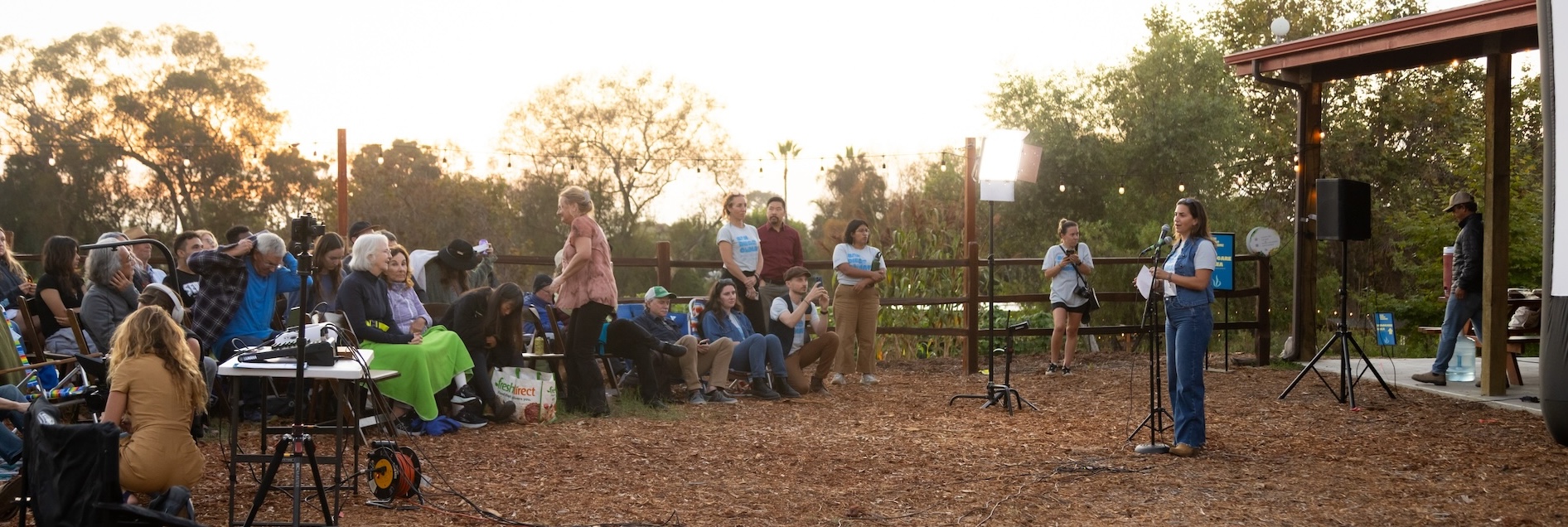
Though experts in climate and environmental fields, the individuals I work with locally are largely unfamiliar with the focus of my day job. When I do explain, their initial reactions are understandably filled with shock and aversion. Many are deeply rooted in the conservation movement and committed to justice and equity. Their impression is that the consideration of geoengineering is not aligned with those values.
From skepticism to productive dialogue
The reactions of my peers make sense. The literature shows that reactions when first finding out about SRM are strong and usually negative, especially for those who place a high value on nature. Some researchers have called this the “primal scream.” If the idea of SRM wasn’t immediately jarring to them, I’d probably be more concerned.
And while my experiences and beliefs are very similar to my peers’, after learning more about the topic, I chose to engage closely with SRM. Why is that? For me, the issue of SRM is intimately about justice, equity, and human rights. SRM could be–though there’s much more research needed to determine its efficacy–an opportunity to limit some of the profound harms the Global North has inflicted through climate change, and to give my generation a fairer chance at thriving on this planet while reimagining a healthier relationship with nature. What I do not seek is an SRM future that upholds the same societal norms, institutions, and energy sources that brought us here in the first place.
Looking up, and also around
Moving between the most global of conversations about SRM and the most local about my own community has clarified the value of holding both perspectives at once. On one hand, I get to engage with ideas that could shape the future for generations to come. On the other hand, I work on problems in my backyard that are tangible and solvable. Each offers hope in a different way.
I also feel drawn to consider how these conversations can be made to feel less separate. How can SRM be grounded in familiar places and realities? How can it be woven into the greater climate conversation? What about this conversation applies to my local decision-makers? It is understood that SRM should be deliberated at the community level in order to create the conditions necessary for care, accountability, and agency. Conversations that grapple with these questions, in places like local Climate Weeks, are a start.
One thing that immediately ties the conversations together is this: solar geoengineering could never work without rapid decarbonization. And decarbonization requires action at every level, from large-scale corporate and national commitments to individual and community-driven change. For SRM to even be considered a safe option, everyone has a role to play.
Seeing firsthand the perception of geoengineering some of my peers have, if they’ve heard of it at all, makes the work undertaken at DSG all the more important. Clarifying misinformation, communicating nuance, and improving the media and public’s understanding of SRM are essential steps toward more informed public dialogue.
Photo credit: Rasha Asfour
Join Our Community
Stay informed about the latest developments in solar geoengineering and how you can make a difference. Subscribe to our newsletter for insights, updates, and opportunities to get involved.
Latest Posts

Before the Rules Catch Up: What AI’s Pace and Safety Challenges Mean for SRM Governance
.jpg)

New global dataset expands access to local-scale SRM modeling

Community Engagement in Solar Radiation Modification: Lessons from Two Models

Readiness Is Not a Destination: Lessons from a Cross-Sector Dialogue

SRM as a Tool for Climate Security: Competitive Framing and its (Geo)Political Implications


Reading the Signals: Stardust and the Shape of an Emerging Field
