
Earth’s Interconnected Climate Systems
The Atmosphere: Earth’s Climate Regulator
Earth’s atmosphere, primarily composed of nitrogen (78%), oxygen (21%), and argon (0.93%), regulates the planet’s climate and sustains life. Trace gases like carbon dioxide (CO2), methane, and nitrous oxide trap heat through the greenhouse effect, helping to maintain a habitable climate. However, human activities such as burning fossil fuels and deforestation have increased greenhouse gas (GHG) concentrations, trapping excess heat and disrupting climate balance. The atmosphere also drives weather patterns by redistributing heat and moisture, meaning rising CO2 levels can alter precipitation, intensify storms, and impact ocean circulation, highlighting the interconnected nature of Earth’s systems.
Energy Balance: How Earth Stays in Equilibrium
Earth’s climate is powered by the Sun, with solar energy entering the system as shortwave radiation. This energy is absorbed by the planet’s surface and re-emitted as longwave radiation. The balance between incoming solar energy and outgoing heat determines Earth’s overall energy balance and average temperature, which plays a major role in determining its climate. GHGs naturally trap some of this outgoing heat, which have kept the planet warm and generally comfortable.
However, human activities have upset this energy balance by increasing the concentration of GHGs, leading to more heat being trapped. This enhanced greenhouse effect is causing global temperatures to rise, driving changes like melting glaciers, raising sea levels, and more extreme weather events. Even small changes in this energy balance can have cascading impacts on ecosystems, weather systems, and human lives and livelihoods.

Carbon Sinks and Sources: The Role of Storage and Release
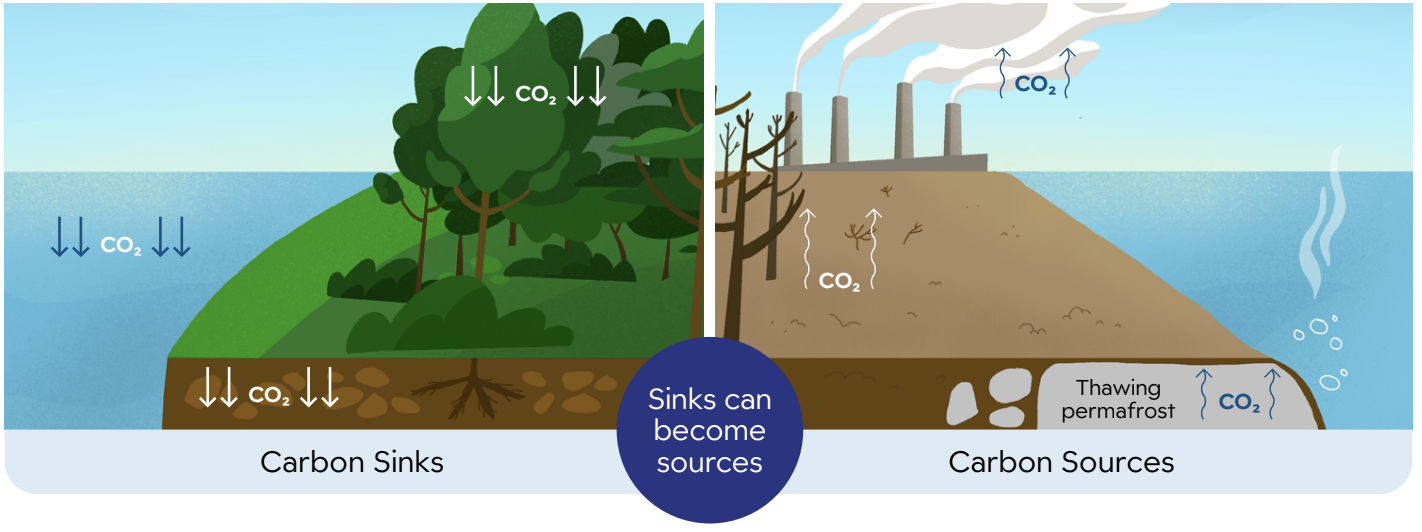
A key component of Earth’s climate system is the interaction between carbon sinks and sources, which regulate the levels of greenhouse gases in the atmosphere. Carbon sinks are natural systems that absorb and store more carbon than they release.
Examples of carbon sinks include:
- Forests: Trees store carbon in biomass and soils.
- Oceans: Absorb CO2 but are losing efficiency due to warming.
- Soils: Store organic carbon, but degradation releases CO2.
These sinks play a crucial role in offsetting human emissions by sequestering CO2 over varying time horizons. For instance, ocean uptake of carbon can span centuries, while forests store carbon on shorter time scales, depending on deforestation rates and ecosystem health.
In contrast, carbon sources release more carbon than they absorb, contributing to rising atmospheric CO2 levels.
Examples of carbon sources include:
- Burning fossil fuels: Adds CO2 to the atmosphere.
- Deforestation: Reduces carbon absorption capacity.
- Thawing permafrost: Releases stored methane and CO2.
The distinction between sinks and sources is dynamic, which means that under certain conditions, sinks can become sources. For example, as global temperatures rise, permafrost thaws, releasing previously stored methane and carbon dioxide, turning a former carbon sink into a powerful source of emissions. Similarly, ocean warming reduces the capacity of seawater to absorb CO2, weakening one of Earth’s largest carbon sinks.
Understanding these time-dependent shifts between sinks and sources is critical for climate mitigation. Strategies that enhance natural sinks—such as reforestation and soil carbon sequestration—can help slow climate change, while reducing emissions from major sources remains essential to restoring Earth’s energy balance.
Feedback Loops: Climate’s Chain Reactions
Feedback loops are processes in Earth’s climate system that either amplify or dampen changes. These loops highlight how interconnected the atmosphere and energy balance are with the rest of the climate system.
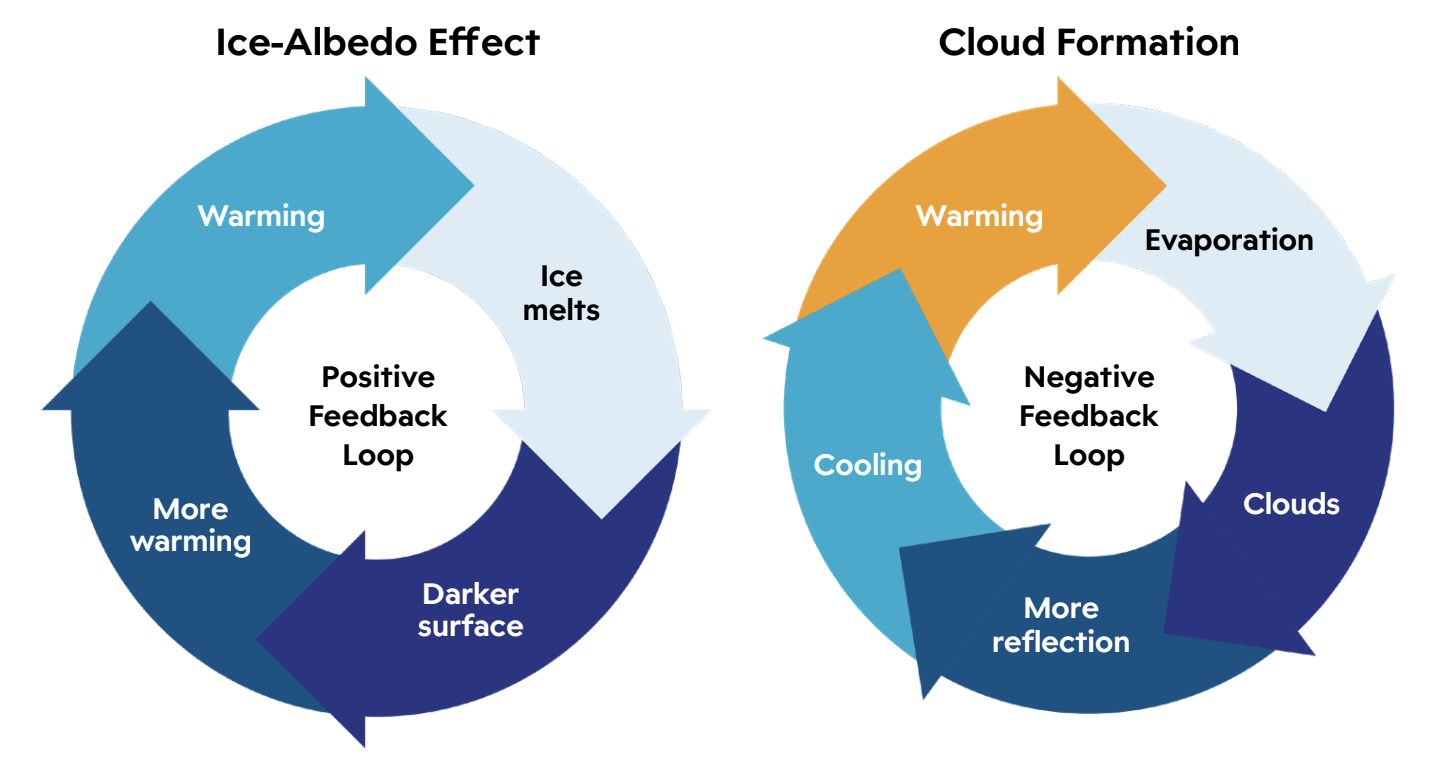
Positive feedback loops amplify warming. Some examples include:
- Ice-Albedo Effect: Melting ice exposes darker ocean water, which absorbs more heat, causing
further ice loss. - Permafrost Thaw: As permafrost melts, it releases methane, a potent greenhouse gas, which
accelerates warming.
Negative feedback loops slow or reduce changes. Some examples include:
- Cloud Formation: Warmer temperatures can lead to increased evaporation and more cloud cover,
which reflects sunlight and reduces warming.
While negative feedbacks provide some natural stabilization, many of the feedbacks triggered by human-caused climate change are positive, amplifying warming and its consequences.
Why These Systems Matter
Earth’s atmosphere, energy balance, and feedback loops are deeply interconnected. A change in one part of the system can ripple across others, amplifying the impacts of climate change. For example, a warming atmosphere (energy imbalance) accelerates ice melting (positive feedback), which alters weather patterns globally. Understanding these interconnected systems is critical to stabilizing the climate and avoiding the cascading effects of a warming planet.

Subscribe to our newsletter
Stay connected with DSG — get the latest news and insights delivered to your inbox.