
Governance and Policy Resources
Governance Analogies from High-Risk Technologies
Download this resource:
Solar geoengineering (also known as solar radiation modification or SRM) governance can draw onapproaches and frameworks (or lack thereof) from other emerging, high-risk technologies, and hazardous activities. These analogies provide insights into international oversight, risk mitigation, and transparency mechanisms that could be adapted to SRM governance. Importantly, none of theseanalogies are perfect, and some fields offer learnings on how not to do things.
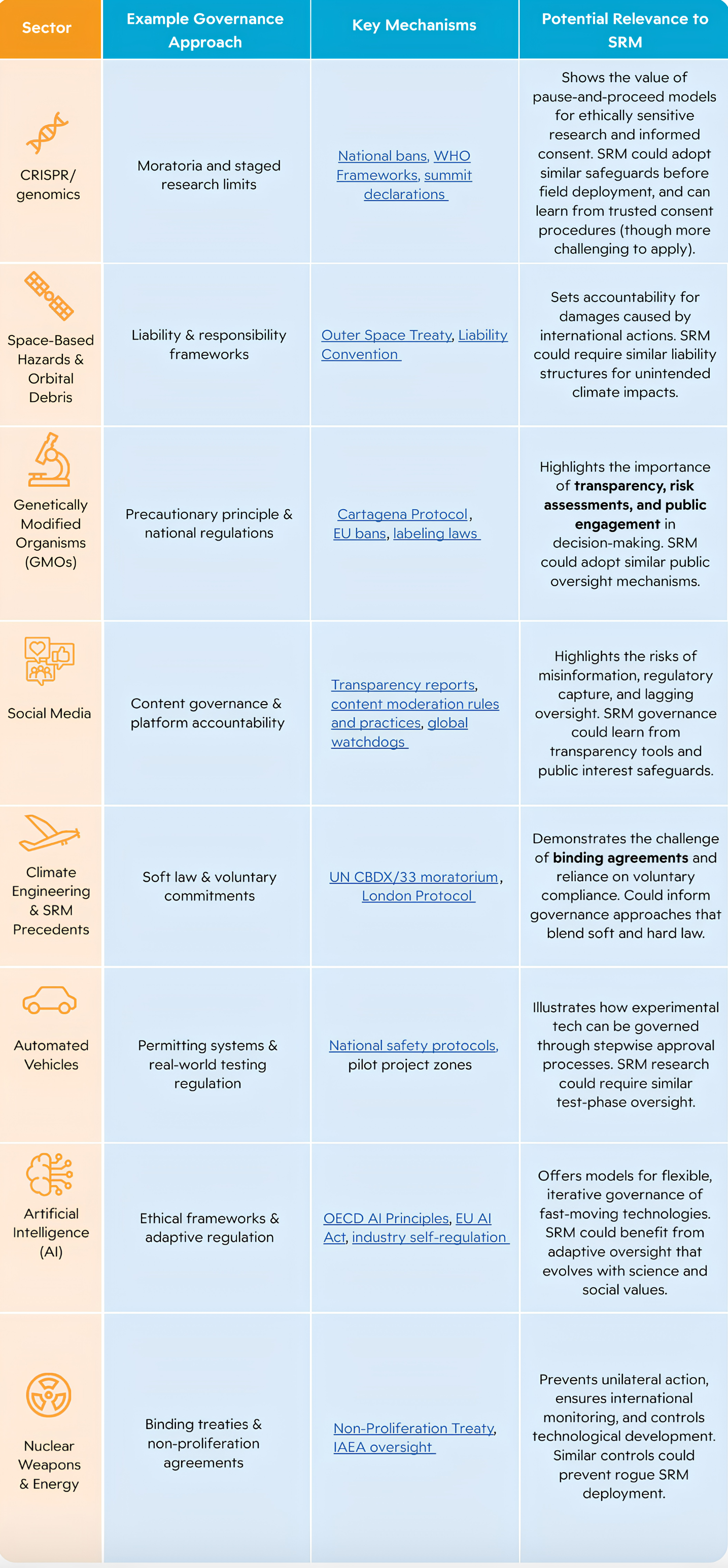
Key Governance Mechanisms & Tools for SRM

Takeaways for SRM Governance
- Hard law (binding laws, regulations, treaties) can prevent unilateral SRM action but may take years or decades to build and implement.
- Soft law (voluntary codes of conduct, research registries, transparency measures) allows for quicker adoption but lacks enforcement and accountability.
- Hybrid approaches, combining international agreements, transparency, and liability frameworks, may provide the most viable governance structure.
- Public engagement and capacity building are critical, drawing lessons from GMOs and space governance can help ensure legitimacy and trust.

Subscribe to our newsletter
Stay connected with DSG — get the latest news and insights delivered to your inbox.